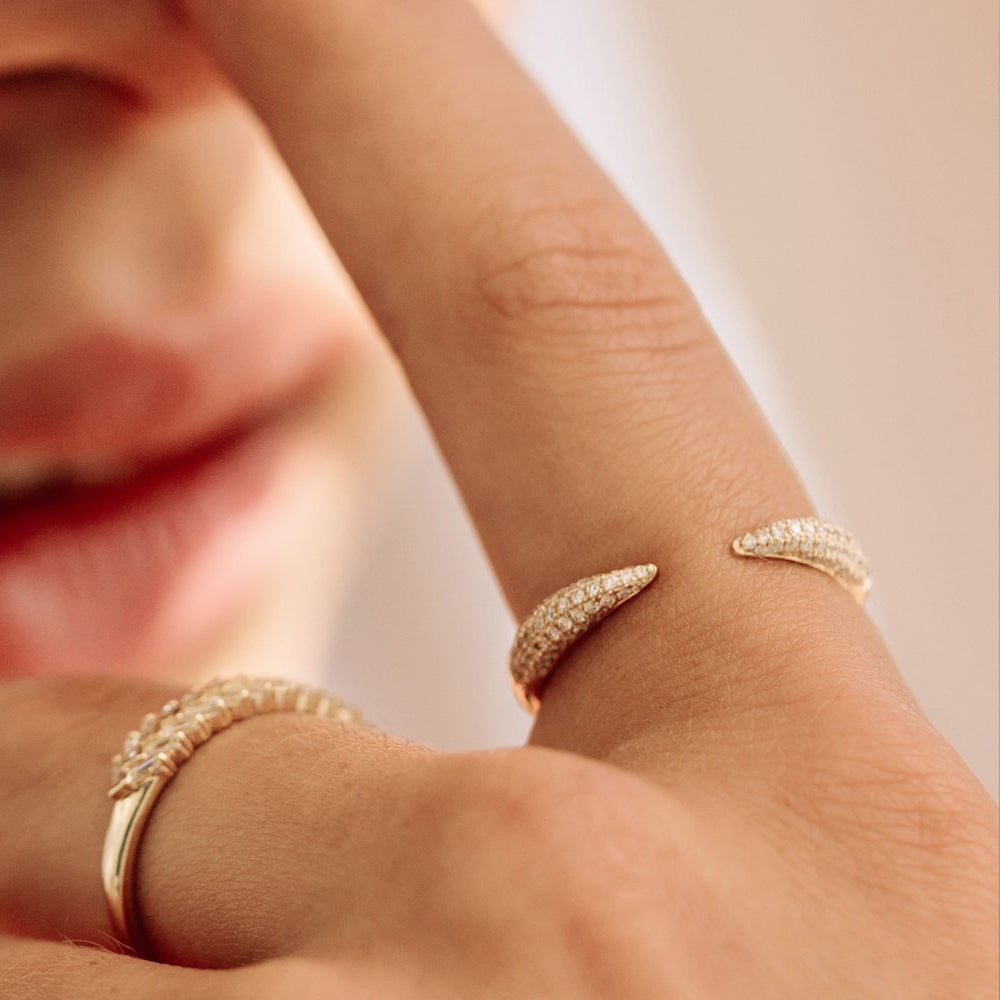

Laboratory-grown diamonds offer the same essential chemical composition, crystal structure and optical properties as natural diamonds. Their origin differs, but the qualities responsible for brilliance, hardness and appearance remain those of diamond.
The difficulty is identifying which stone represents good value without paying unnecessarily for characteristics that make little visible difference.
A thoughtful purchase begins with understanding how diamonds actually perform, rather than assuming the highest numerical specifications will produce the most attractive piece of jewellery.
The Difference Between an Expensive Diamond and a Beautiful One
Carat weight often attracts attention first because it determines how much a diamond weighs. However, weight alone reveals little about its face-up appearance.
Consider two round diamonds weighing 1.50 carats. One has carefully balanced proportions, allowing light to reflect efficiently through its facets. The other carries more weight in its depth, potentially reducing its visible diameter.
Both weigh the same, but they may look different in an engagement ring.
Cut quality affects brightness, fire and the flashes of reflected light seen as the diamond moves. For round brilliant diamonds, an excellent cut grade can provide a useful starting point, although the proportions and actual appearance still deserve attention.
For fancy shapes such as oval, pear and emerald cuts, measurements and visual assessment become particularly useful.
An oval diamond may appear larger than a round diamond of the same weight because its elongated outline distributes its surface area differently. Yet length alone does not guarantee an attractive appearance. An overly narrow oval man made diamonds look unbalanced, while an obvious dark bow-tie pattern can interrupt its brilliance.
These details explain why diamond shopping cannot be reduced to choosing the largest stone within a budget.
Reading Diamond Specifications Without Overpaying
The traditional four Cs, cut, colour, clarity and carat, remain useful for understanding diamond characteristics.
The challenge is deciding where improvements are worth their cost.
Colour Grades and the Influence of Metal
Diamonds in the D–F colour range are considered colourless under conventional grading systems, while G–J diamonds fall within the near-colourless category.
The distinction between neighbouring grades can be difficult to detect in everyday viewing conditions, particularly once a diamond is mounted.
Metal colour can influence the overall impression. A near-colourless diamond may appear appealing in yellow gold, where the contrast between the stone and setting can soften the need for the highest colour grade.
Platinum and white gold produce a different visual effect, making the relationship between diamond colour and surrounding metal worth assessing.
Rather than selecting a colour grade in isolation, compare stones against the setting in which they will eventually be worn.
Clarity Should Be Judged Visually
Clarity grades describe internal characteristics and surface features, not simply whether a diamond looks attractive.
A VS1 or VS2 diamond may appear clean to the unaided eye, depending on the location, size and visibility of its inclusions.
Paying extra for flawless clarity may offer little practical benefit if the difference is only observable under magnification.
However, inclusion placement matters. A prominent feature beneath the table facet can be more noticeable than a similar inclusion positioned towards the edge.
Buyers comparing diamonds online should request magnified images or videos alongside grading information.
Independent Diamond Reports and What They Actually Confirm
Independent grading documentation helps establish a diamond’s identity and characteristics.
The International Gemological Institute (IGI) provides laboratory-grown diamond reports that identify origin and assess characteristics including carat weight, colour, clarity and cut-related features.
The Gemological Institute of America (GIA) introduced a revised system for colourless to near-colourless laboratory-grown diamonds in October 2025. Its current system uses Premium and Standard classifications rather than the traditional natural-diamond colour and clarity nomenclature.
This distinction matters when comparing reports issued by different organisations or in different years.
A grading report should be checked for its issuing laboratory, report number, measurements and stated origin. Reports can generally be verified through the issuing organisation’s official verification service.
Buyers should also understand that a grading report is not the same as an independent monetary valuation.
Certification documents diamond characteristics, while pricing depends on additional factors including the retailer, design, craftsmanship and prevailing market conditions.
Comparing Lab-Grown Diamond Retailers in the UK
A reliable retailer comparison should extend beyond the price displayed beside a diamond.
The ability to review specifications, understand setting options and establish what happens after purchase can make a considerable difference.
For buyers researching Best Lab Grown Diamonds UK, a useful starting point is to compare individual diamond grading details alongside setting choices and written purchase terms, rather than treating any retailer’s catalogue as proof of superior quality.
Several practical details deserve particular attention:
-
Diamond visibility: Can the buyer examine photographs or videos of the actual stone rather than a representative image?
-
Grading transparency: Is an independent report available, with a number that can be verified?
-
Setting specifications: Are the precious metal, mounting style and diamond dimensions clearly identified?
-
Aftercare: What is included for cleaning, inspections, resizing and repairs?
-
Purchase terms: Are delivery estimates, returns, warranties and custom-order restrictions explained before payment?
These questions are especially relevant to online engagement ring purchases, where buyers cannot always examine the finished jewellery before ordering.
A lower advertised price may lose its appeal if the accompanying specifications or post-purchase arrangements are unclear.
Diamond Shape Changes Both Appearance and Practicality
Personal preference usually determines diamond shape, but each outline carries practical considerations.
Round brilliant diamonds are designed for strong light performance and suit many setting styles.
Oval diamonds create an elongated appearance, although their proportions and bow-tie visibility require careful inspection.
Emerald cuts produce broad flashes of light through step-cut facets. Their large, open appearance can make some internal characteristics more visible, increasing the importance of clarity assessment.
Princess cuts offer a geometric outline with pointed corners that benefit from suitable protective prongs.
Pear-shaped diamonds combine rounded and pointed elements, making orientation and tip protection relevant to the finished design.
The relationship between shape and setting deserves as much consideration as the stone itself. A striking loose diamond will not necessarily create a comfortable everyday ring unless its mounting suits the wearer’s routine.
A Larger Diamond Is Not Always the Better Purchase
Lab-grown diamonds allow buyers to consider larger carat weights at prices that may be substantially below comparable natural diamonds.
That flexibility can be appealing, particularly for engagement rings.
Still, a larger centre stone introduces design questions that buyers sometimes overlook.
A high-set stone may catch more easily on clothing. A thin band carrying a comparatively heavy centre diamond may require careful engineering to maintain stability.
Larger diamonds also need appropriately constructed prongs and sufficient support around the mounting.
For someone who regularly works with their hands, a slightly smaller stone in a secure, lower-profile setting may be more practical than a prominent raised design.
The goal is to select proportions that work together.
A well-balanced 1.20-carat diamond may provide a more satisfying result than a larger stone fitted into a setting chosen primarily to minimise its cost.
The Real Value of Customisation
Customisation is useful when it addresses a specific design or wearing requirement.
For example, a buyer may want an oval centre stone positioned low enough to reduce snagging while allowing a straight wedding band to sit reasonably close to the engagement ring.
Those requirements affect the setting’s architecture.
A basket design, cathedral shoulders or carefully planned band height can influence the relationship between the rings.
Customisation can also help accommodate finger proportions, preferred metal colour or a particular diamond shape.
However, complicated designs introduce additional manufacturing considerations. Very delicate pavé bands, unusually thin shanks and intricate hidden details may require greater maintenance.
A design should be evaluated for its construction as well as its appearance.
What Long-Term Ownership Means for Lab-Grown Diamonds
A laboratory-grown diamond has the same Mohs hardness of 10 as a natural diamond, giving it excellent resistance to scratching.
Hardness does not mean a diamond is immune to damage. Sharp impacts can still chip vulnerable edges or pointed corners.
Jewellery settings require attention too. Prongs can wear, precious metals can develop scratches, and rings may need resizing over time.
Simple care habits help preserve the condition of fine jewellery.
Remove diamond rings during activities that could expose them to strong impacts or harsh chemicals. Clean suitable pieces gently with mild soap, warm water and a soft brush, following any care instructions for the particular setting.
Periodic inspection by a jeweller can identify loose stones or worn prongs before they become more serious concerns.
Confirming the Details Before Ordering
The final purchase decision should bring together the diamond, the setting and the retailer’s written terms.
Check the exact diamond report number and confirm that the measurements correspond with the stone selected. Ensure the quoted price covers the intended setting, relevant taxes and any additional services included in the order.
For UK purchases, confirm whether the displayed amount includes VAT and whether international shipping or customs arrangements are relevant.
Ring size deserves special attention. Wider bands can feel tighter than narrow bands of the same nominal size, and rings with certain designs may have limited resizing options.
Buyers commissioning personalised jewellery should obtain written confirmation of production times, engraving details, return eligibility and available alterations.
Finally, consider how the engagement ring will sit alongside a future wedding band. Planning both rings together can prevent unexpected gaps, awkward contact between settings or unnecessary redesign costs later.
A diamond’s grading details are valuable, but the most successful purchase is one where the stone’s appearance, the craftsmanship of its setting and the practical requirements of ownership have all received proper consideration.